You answered twenty questions, and CareerIQ handed you four scores and an archetype. This post is the missing manual: what each part of your results actually measures, which details matter, and what to do with them.
Start with the shape, not the numbers
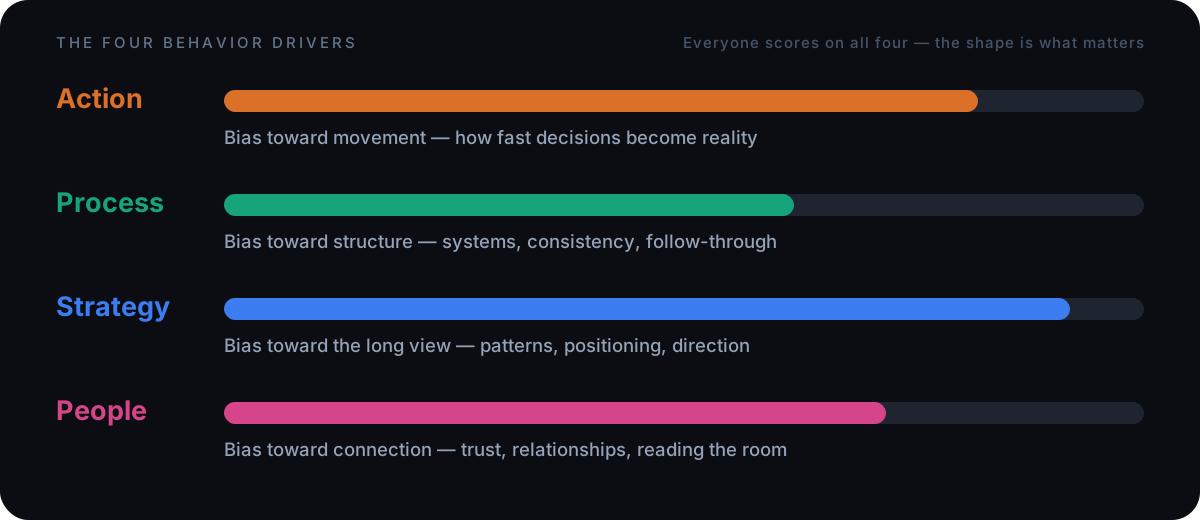
Your results show a score from 0 to 10 on each of the four behavior drivers — Action, Process, Strategy, and People. The most common mistake is reading these like grades, where higher is better. They aren't grades. A 9 in Action isn't "winning" and a 4 in Process isn't failing — they're a description of where your energy naturally goes.
What matters is the shape: which one or two drivers sit clearly above the others. That's the pattern your archetype is built from. Someone at 8-4-7-4 (Action-Process-Strategy-People) and someone at 6-3-5-3 have different intensities but the same shape — and they'll recognize themselves in the same working pattern.
The archetype is a starting hypothesis
Your archetype — Trailblazer, Architect, Catalyst, Strategist, Operator, Connector, Visionary, or Guardian — is the recognizable working pattern your two strongest drivers combine into.
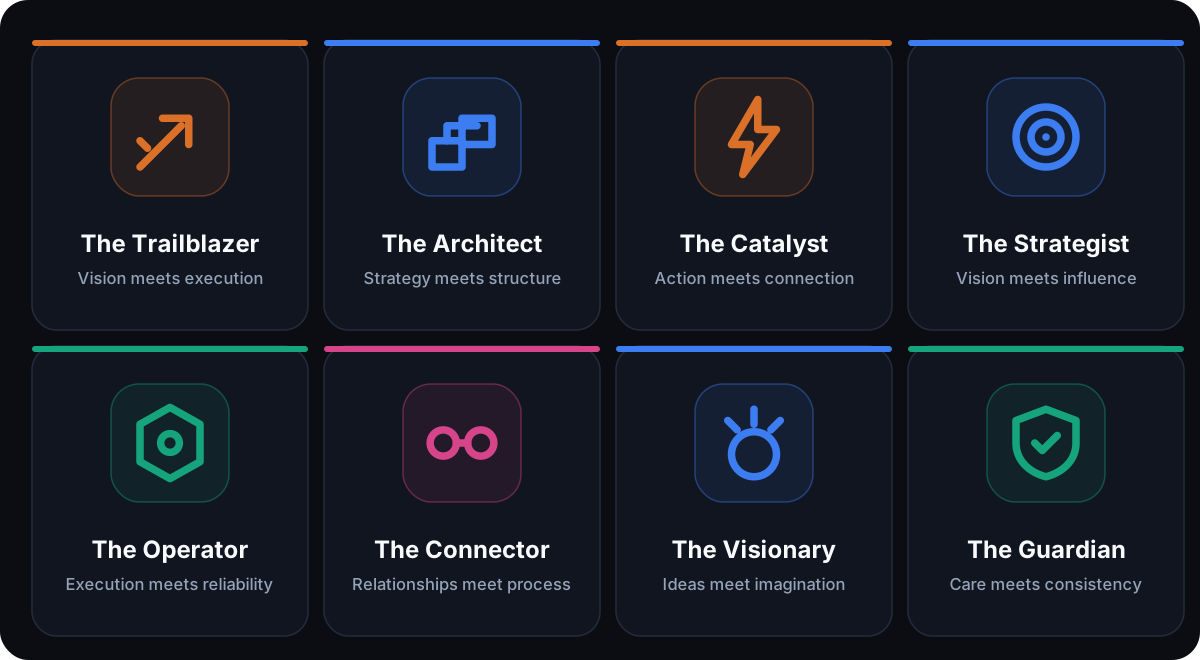
Read your archetype page with one question in mind: does this describe the work I do when nobody is telling me how to do it? Not your job title, not your training — your defaults. If the description lands, the career paths and growth areas on that page are worth taking seriously. If it half-lands, look at your two strongest drivers and read the adjacent archetype too; if your second and third drivers are close, you sit between two patterns, and that's information, not an error.
What your lowest driver is telling you
Your weakest driver isn't a flaw to fix — it's a cost you pay somewhere. A low Process score doesn't mean you can't be organized; it means staying organized costs you energy that an Operator spends for free. Three practical responses, in order of preference:
- Partner for it. The most durable careers pair people with complementary shapes. If you're low-Process, your best colleague is high-Process.
- Systematize it. Automate or checklist the work your low driver makes expensive, so it stops depending on willpower.
- Choose around it. If a role's core loop lives in your lowest driver, no amount of discipline makes it feel natural. That's often the real reason a "good job" feels heavy.
What to actually do next
Sanity-check it against reality. Think of your last three months of work. Which tasks did you finish early, and which did you push to the bottom of the list every day? The finished-early pile almost always lives in your strong drivers.
Share it with someone who knows your work. Your results page has a share link for exactly this reason. Other people are better at seeing your pattern than you are — ask a colleague whether the archetype sounds like you. Their reaction is data.
Look at your team's shapes together. The individual assessment gets more useful when the people around you take it too. A team's combined shape predicts its failure modes — all-Action teams ship fast and break things, all-Process teams polish and never ship. That's what Introgauge for teams measures, including how far a team's profile sits from its ideal.
Retake it when your context changes. Behavior drivers are stable, but not frozen. A new role, a career switch, or a few years of different work can shift your shape. Once a year is plenty.
The scores are the easy part. The useful part is the conversation they start — with yourself, about why certain work drains you, and with the people you work with, about how your patterns fit together.